
What does this career involve?
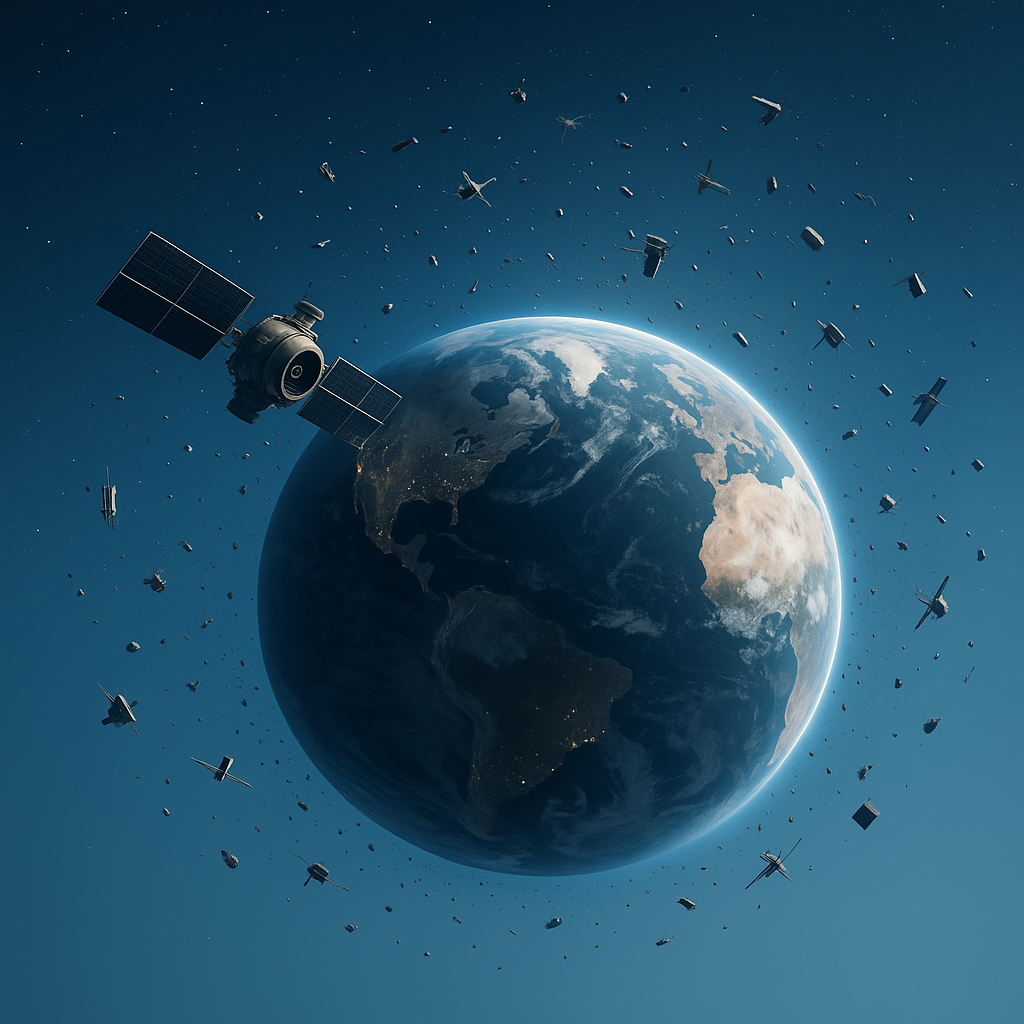
Space traffic management specialists watch what is in orbit and what is about to pass too close to what. They combine tracking data from radars and telescopes, calculate the chance of a collision, warn the satellite’s operator and, where needed, agree who moves. The future version of the job adds international rules for sharing orbit, automated coordination between operators, and far more objects than any team could handle by hand.

Why is this a future career?
In development, not yet in service (autumn 2026). More than 14,000 satellites are in orbit, over 800 of them run by UK organisations, and the tracked catalogue of objects passed 33,000 in early 2026. The UK’s National Space Operations Centre already works around the clock and sends thousands of collision warnings a month. What does not exist is a coordinated system, agreed between countries, for managing that traffic as a whole. Building it is the work ahead.
Skills for this career
Related Technologies of the 4IR
Big Data and Predictive Analytics

Artificial Intelligence

Cloud Computing and Edge Computing

Autonomous Vehicles

The Reality Continuum (AR/VR)

Where to start
Maths and physics are the core subjects, with computing a strong third. Routes in include a degree in physics, aerospace engineering or data science, or an engineering apprenticeship with a satellite operator.