
What does this career involve?
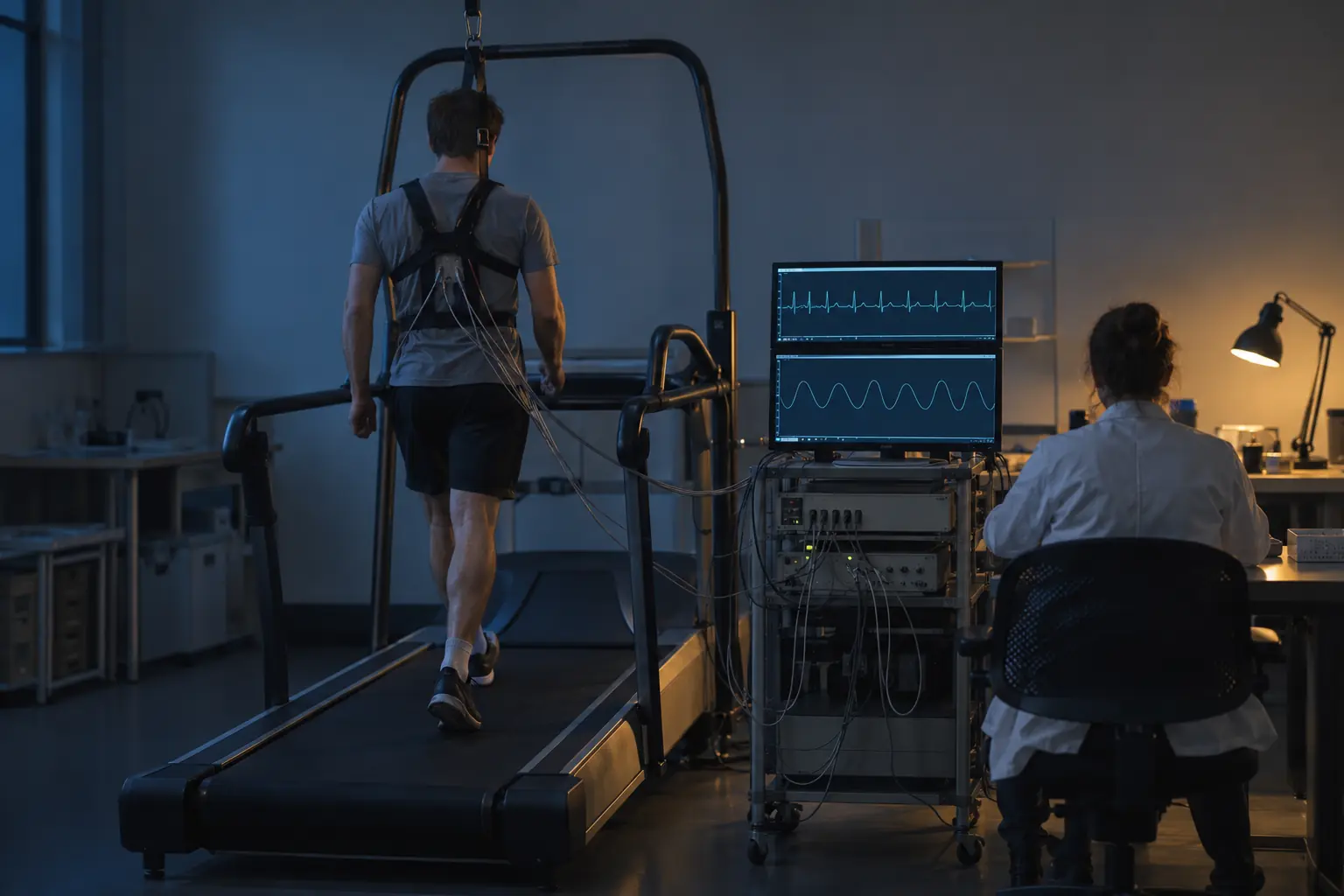
Spaceflight is hard on the body. Without gravity, bones and muscles weaken, fluid shifts towards the head and eyesight can change; beyond Earth’s magnetic field, radiation is a constant concern; and a crew far from home must handle its own medical emergencies. Space medicine and human performance specialists study these effects and counter them: selecting and training crews, designing exercise and nutrition programmes, developing medical equipment that works in microgravity, and monitoring health before, during and after a flight. Most of the work happens on the ground.
Why is this a future career?
A small field today, mostly at the European Space Agency (ESA) and NASA, with no standard UK route in (autumn 2026). Artemis II flew four astronauts around the Moon in April 2026, with crewed landings planned for later this decade and longer stays to follow. Companies now fly paying passengers who are not professional astronauts, so selecting only the fittest no longer works. In 2025 John McFall, a British surgeon and ESA reserve astronaut, became the first person with a physical disability medically cleared for a long space station mission: the standards are being rethought.
Skills for this career
Related Technologies of the 4IR
Genomics
Biotechnology
The Reality Continuum (AR/VR)
Internet of Things (IoT)

Artificial Intelligence

Where to start
Biology is the core subject; chemistry, physics and PE all help. Most people qualify first as a doctor, physiologist, sport scientist or engineer, so the careers above are the usual first steps.